From London to San Vito
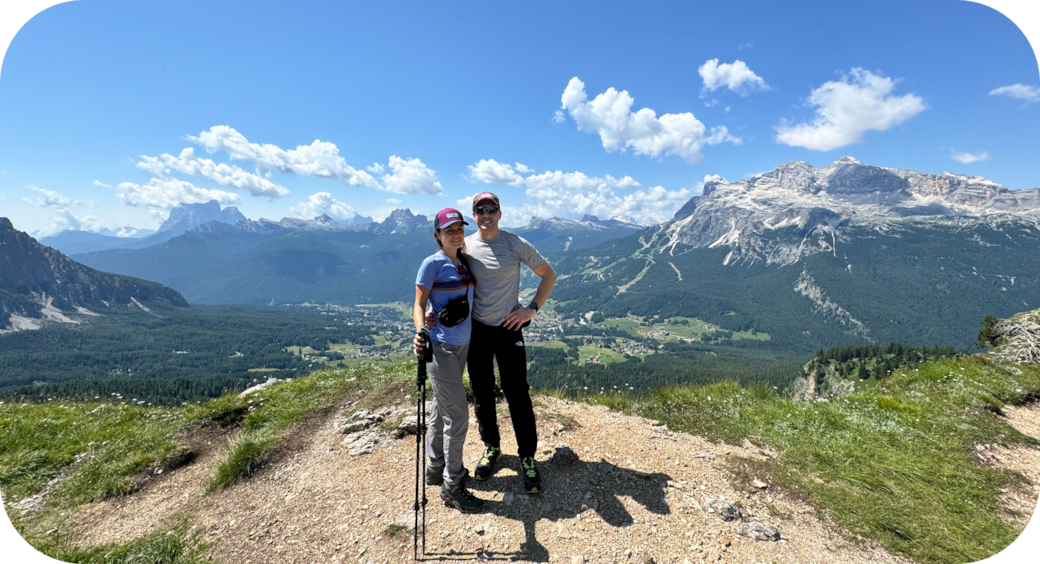
Hi there! We are Laura and Andrea — both born and raised in Italy, though London has been home for more than thirteen years now.
A couple of years ago we reached a turning point: keep building our life in London, or put down roots back in Italy too.
We chose Serdes, a small village in San Vito di Cadore, and the chance to bring Andrea's family home back together. We bought the remaining half of the house and restored it — not just as somewhere to stay, but as a proper base and the first piece of a longer-term project.
We still live in London, but this house has been our way of laying the groundwork for our return to Italy. We wanted a place where guests could experience the Dolomites the way we do: slowly, without the rush, with a real feel for the landscape and the life around it.
This is where Dolomites Escapes began.
Andrea is a qualified ski instructor and partner at Scuola Sci Cortina (Cortina Ski School), while Laura is a mountain lover and L2 WSET-certified wine enthusiast - so between the two of us, we've got the mountain covered and the wine list sorted, from the best runs on the slopes to the best wines of the region and beyond (Laura will happily talk your ear off about both).
Ciasa Tone de chi de Tòful
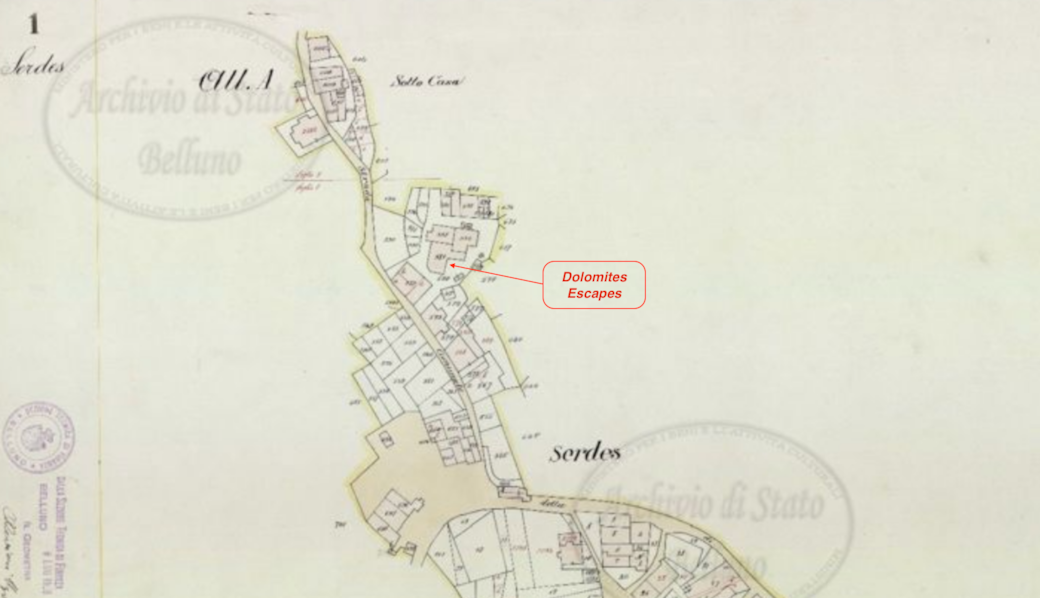
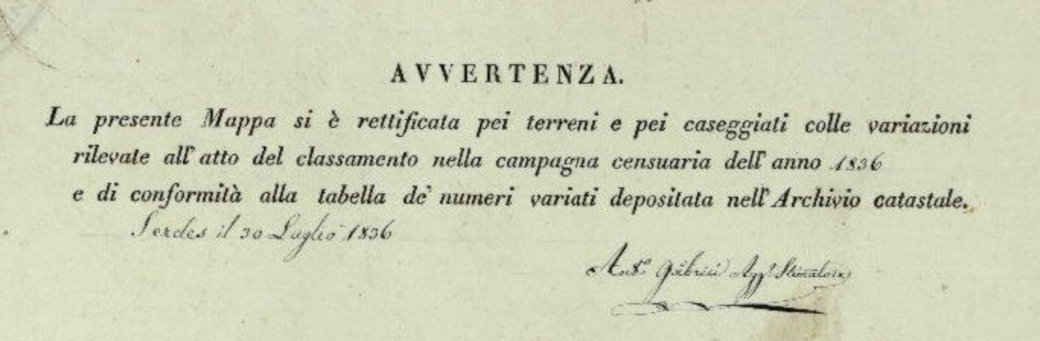
The house has been part of Andrea’s family for generations. It first appeared in official records starting from 1836 (as shown in the below map from the National Archives), although it presumably dates back to the previous century.
“De chi de Tòful” is the family’s soranome: a traditional family-nickname passed down through generations. In San Vito, where many families share the same few surnames, these additional names have historically been used to distinguish one branch of a family from another. They speak not only of who you are, but of where you belong.
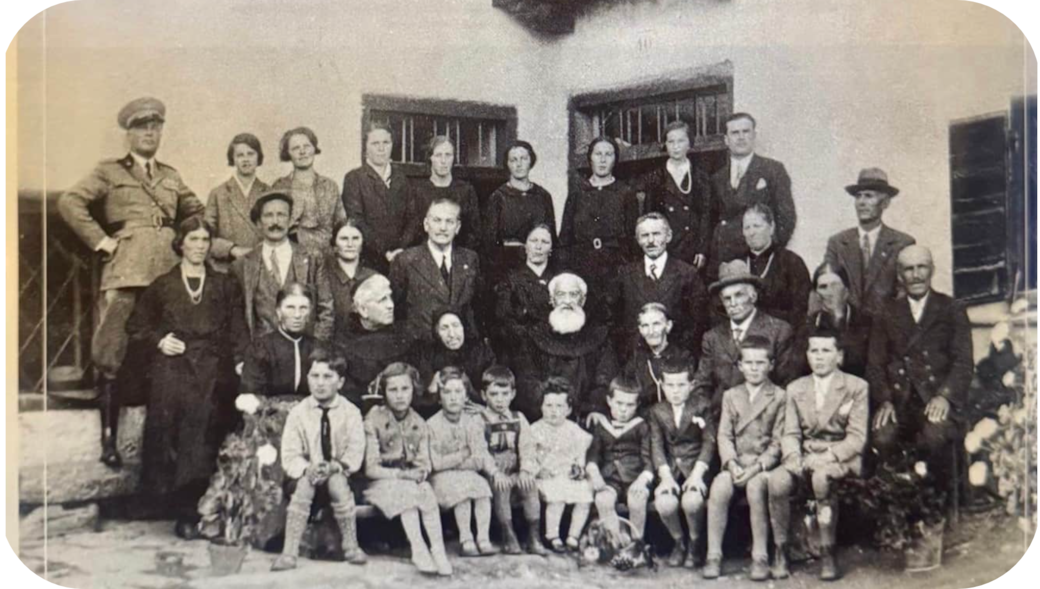
The house is known as Ciasa de Tone de chi de Tòful after Andrea’s great-grandfather Antonio, “Tone” in local dialect (can you spot him in the picture above take in front of his house - second row, third from the right?
In the early 1900s, Tone emigrated to the United States and worked as a carpenter. Like many people from the mountains, he left in search of opportunity -but home eventually called him back. He returned to San Vito, served in the Compagnia Boscaioli (Forestry Company) during the First World War and went on to live in this house for more than fifty years.
Today, his story remains part of the fabric of the building - and of everything we are creating here.
Restoring the house, preserving its story
The house stands within an area protected by the heritage authorities, which meant its external character had to remain unchanged. Even the traditional windows, with their delicate glazing bars, were carefully preserved as part of the restoration.
Inside, the building revealed the craftsmanship of another time: stone walls, exceptionally thick at the base and gradually becoming lighter as they rise through the house.
We kept everything we could from the original attic, including its beams, timber wall planks, old door and two small windows. These materials have been carefully given a new purpose in the duplex, where they now form the stua—the traditional heart of an Alpine home—and the timber panelling in one of the bedrooms.
The small opening looking into the stua was once one of the attic shutters.
These details are deliberately imperfect. They hold the marks of time, the memory of the house and the hands of those who lived here before us. By preserving them, we have allowed the house to evolve without losing what makes it meaningful.
Dolomites Escapes is the next chapter in that story: a family home thoughtfully restored and opened to guests who want to experience this place with curiosity, care and a true sense of belonging.